Home Education is NOT School at Home

Teachers are trained to deliver a curriculum to large masses of students in a school setting. It’s an incredibly challenging job. They have to first have an understanding of the curriculum they are teaching, which is often complicated, and ever-changing and constantly reviewed. They have to know the standards in which their students will be assessed, and they have to be skilled at carrying out a range of assessments to determine this data. They have to be creative in knowing how to teach skills and content to large groups of students who are all at different developmental levels and who have differing abilities and backgrounds. This is why teachers are trained to be proficient at implementing a plethora of different teaching strategies. They also have to draw on a range of behaviour management and engagement skills in order to effectively run a classroom of up to 20 or 30 students at once. They have to be excellent relationship builders and be sensitive to students’ individual challenges and personal lives. Teaching is an incredibly challenging profession and all of the teachers I know do an absolutely amazing job.
⠀⠀⠀⠀⠀⠀⠀⠀⠀⠀⠀
But here’s why choosing to homeschool doesn’t undermine the skill and expertise of teachers. Homeschooling isn’t running a classroom in your house. You are not delivering a curriculum to masses of students at once. You are working with your own children, one-on-one. You do not need to collect and analyse data in the ways that classroom teachers do. You do not need to differentiate activities, because homeschooled children are working at their own level 100% of the time. You don’t have to spend time on behaviour and classroom management, because you know your children better than anyone else, you know their ins and outs, what makes them tick, what works for them. And with information at our fingertips you can learn together, research, or source an expert to explore new or unfamiliar topics.
⠀⠀⠀⠀⠀⠀⠀⠀⠀⠀⠀
Home educating, despite its most common name – homeschooling – is not creating school at home. That’s the point! It is something completely different. But wonderful.

Mums, take heart.

The world is a scary place right now. The constant smatter of unsettling global events and the fact that society is spiraling faster and faster into absurdity affirms that our children are going to grow up in a very different place than we did during our own childhood. Mums, take heart. Your role is more important than ever right now. Make your home a refuge for your children, make your presence a safe and loving space away from the chaos. Let the gospel encircle your home like a shield. Shelter them from the crumbling world outside, from the absurd ideas and corruption and lies. Social media posts may be censored, but not yet can they censor the precious truths you can speak to your children in your home. Teach them God’s word and have them hide it in their heart, so that they will be prepared for whatever may come. Mums, through the hugs and lessons and meals and bedtimes, show them the greatest hope that humanity has.

Reclaiming Childhood

It occurred to me today that we’re living in a world that is nothing like the one I knew as a child. Obviously this pandemic has drastically changed society, but even aside from that, our world has changed. Technology is abundant, but so are dangers and deception. Smartphones and tablets and screens are an extension of our body. Worrying statistics show us that childhood anxiety is on the rise. Families are being told that they function best when separated and are encouraged to enter their children into ‘the system’ earlier and earlier. A system where children have become victims to wicked and worrying agendas that are infiltrating our schools, our televisions, our lives, their childhood. We live in the age of social distancing, in a society where we are pitted against one another, where human connection is lost and undervalued. Education has become less about children, and more about adults.
⠀⠀⠀⠀⠀⠀⠀⠀⠀⠀⠀⠀
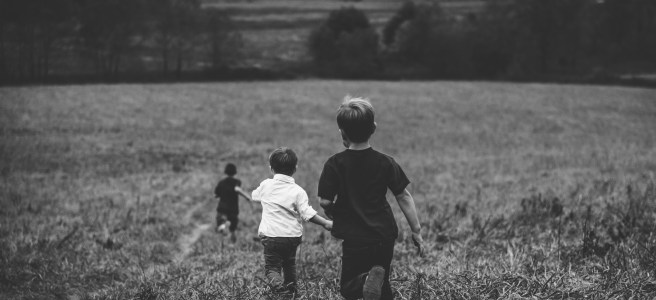
In this crazy and chaotic world, I want my children to be free. I want them to experience their childhood wholeheartedly and fully. I want them to run away from the bombardment of handheld screens and feel the grass under their toes and the sun on their face. In a world that is unpredictable and ever-changing, I want them to know that they are a part of a solid family unit and an eternal plan. I want them to learn how to safely navigate this new digital age without cyber threats and social media attacks and secrets and adult content and mainstream media. I want to treasure their innocence, rather than see it snatched away by today’s culture. I want them to love learning, to be curious and discover things, without being squashed by standardised testing. I want my children to run up the slide and climb trees without being told that it’s against the playground rules. I want them to connect with other humans. I want them go against every grain of this society that tells us how we should live our life. I want them to be free to be a child and to experience kindness, silliness, contentment, safety and joy.

The Vestibular System and Child Development

Did you know the vestibular system is our body’s first sensory system to develop in the womb? It is controlled by the inner ear, and it is incredibly important.
⠀⠀⠀⠀⠀⠀⠀⠀⠀
A well-developed vestibular system allows children to have the postural strength to sit at a desk, or to control their arm muscles when writing. Stimulating the vestibular system improves fine motor skills and hand-eye coordination. The vestibular system even helps to develop eye muscle movements that are required to track words when reading.
⠀⠀⠀⠀⠀⠀⠀⠀⠀
The thing is, in order to develop the vestibular system, children need to MOVE. Running, or playing a short physical game may stimulate the vestibular system to a small extent. But since this important sensory system is stimulated by fluid in the inner ear, what children really need to be doing is swinging, rolling, going upside down, tumbling, jumping from heights, falling, clambering and climbing. Unstructured, risky, physical play.
⠀⠀⠀⠀⠀⠀⠀⠀⠀
When we impose rules like ‘no running on the playground’ or ‘no going up the slide’ or ‘you cannot climb that’ we are hindering the development of this important system. It’s completely counter productive to tell children to stop moving and sit still – they will not develop the muscle and posture control they need to sit and work unless they spend their childhood MOVING!

“Sit still!”

My son loves cars, trucks and machines. He is constantly constructing and deconstructing. He doesn’t have a strong grasp of language yet but he uses his hands to build, carry and maneuver. He is strong, and thrives when he can move his body.

The other day whilst on a walk, we stopped to watch some building construction happening across the street. My son was enthralled with this scene. But observing these builders had me thinking. There are so many kids at school who can’t sit still, who don’t thrive with bookwork or sedentary tasks. They’re constantly told they need to sit still, write more, be neater and do things that aren’t consistent with their learning style. Sadly, the structure of school means that if these children do embrace their need to move and fiddle, they are disrupting others. There is literally no room to move. Yet I was watching these tradesmen across the road doing their job and making a living, and they were: moving their bodies, using their hands, calculating, designing, pushing, lifting. They were taking notes and calculating mathematical concepts on timber beams while climbing a ladder. They were not sitting still or staying at their desk. Just like mechanics and electricians and other trades people, chefs, hairstylists, firefighters, physical and occupational therapists, police officers, fitness trainers, paramedics, athletes, performers, farmers, and a plethora of other occupations that are valuable contributions to our society.

So why then, do we expect children to sit still, and to stop fiddling? To stop touching, to be quiet, to somehow thrive in an environment that consists of mostly deskwork? Why do we expect children to do things a certain way, when many of the jobs they might have in the future have nothing to do with any of those skills?

Let the children move their bodies. Let them touch things, fiddle, tinker and play.

Distance Learning in Isolation

I hope that parents who are caught up in the chaos of distance education right now understand that this is not a normal way to educate, and it’s not an ideal learning environment for children. It’s not homeschooling, it’s distance learning in isolation. Teachers are working hard to adapt to a stressfully impossible situation but they too know this is not how children learn.

I’ve heard that many schools are implementing full days of online learning every single day of the week, meaning that students have to sit, desk-bound, at their computers for the entire day with a few breaks. It is not normal, nor is it healthy, for children have such a sedentary lifestyle. We know that screentime has an effect on children and teenager’s brains, and we know that sitting at a computer for an entire ‘school day’ at home is not going to be doing their bodies or minds any favours. Children need to move, chat, solve a problem by holding and touching it, build things with their hands, be in nature, have people to bounce ideas off, use concrete materials, exercise visual and spatial skills, and did I mention they need to MOVE?

It’s no wonder parents are finding this tedious and stressful, and that their children are unsettled or unstimulated. So if you’re a parent currently in the throes of this, be gentle with yourself and with your children (and the teachers), and remind yourself that is is not, ideally, how children learn. Take a deep breath, turn off the computer, go outside or just snuggle up and read with them. You are teaching them how to live amid a worldwide crisis. And most importantly, you are teaching them that they are loved and safe no matter what the situation or where they are.

Parenting in a Pandemic

Tonight I had to comfort this teary little one at bedtime, but for reasons that we’ve never before had to comprehend. “Mama, I can’t sleep because I’m sad. I miss my friends and my favourite families and sleepovers, and that’s why we always have to video chat people and put teddies in the window and it’s not fair.” Let’s remember that this unprecedented event is like no other any of us had to experience in our childhood. They see, hear and process everything that is going on around them. Let’s be gentle with them, let’s show patience and understanding. Let them be loud and silly and clumsy inside, when the only reason they can currently leave their house is to go for a walk. Let them not participate in phone calls or video chats if they’re feeling overwhelmed. Let’s listen to their complaints and troubles. Most importantly, let’s be the arrow that points them to the solid rock and greatest hope in these times of trouble.

The Rise of ‘Homeschooling’ amid COVID-19…

Isn’t it funny and amazing how the word ‘homeschooling’ has suddenly become a part of our everyday vocabulary? With the COVID-19 crisis, many schools are closed or parents are choosing to keep their children home. Almost overnight, people are no longer looking at others in shock when they reveal that they are homeschooling!

Let’s not forget though, that the version of ‘homeschooling’ currently happening is not typical. Home educated children, who are normally out engaging with their community, are confined by the walls of their home. We’re isolated, lacking social interaction, missing family and friends. Parents are stressed because they’re trying to work from home with little ones about, or they have lost their jobs completely. We’re living amid a worldwide pandemic. Homeschooling is not normally like this.

However, despite this, I am also seeing so much positivity surrounding homeschooling emerge during this time which makes my heart happy. Parents are realising that their children are still learning. It looks different, sure. But they are capable of learning away from school!

At the moment, social media is littered with happy photos posted by parents navigating this whole new home education thing. Sharing their little homeschool space they have set up, marvelling at how peacefully their children are working – or how chaotically joyful it is to have them around. Parents are posting pictures and videos of various educational activities they have been doing with their children. Many parents are even talking about how they’re not following a school routine, but have instead realised how valuable activities like gardening, sewing, cooking, playing and just talking and reading with their kids are. When I look at all of these families sharing their newfound homeschooling journey, I can’t help but notice a hint of pride in their posts – they’re proud of the fact that they have realised they can actually provide their children with meaningful, educational experiences.

Many people are also realising that in this current age, educational opportunities can be provided for digitally. You do not have to attend a brick-and-mortar school to participate in a class. Children are taking classes online, having video chats with teachers and other field experts, and participating in all sorts of online classrooms and conversations. What a blessing technology is! Obviously, it is not ideal to spend our entire educational lives immersed in a digital world. But, homeschooled children usually participate in a balance of real-life social interactions and online learning opportunities. This crisis has prompted many parents (and teachers) to realise that, thanks to technology, children can participate in educational experiences remotely.

When this is all over, and children go back to school as their parents head back into the workforce, my hopes are that many families might continue to homeschool after seeing such rich benefits (Side note: You don’t have to be a stay-at-home parent to homeschool. My husband and I both work outside the home!). I know that every family is completely different and that homeschooling may not fit with everyone or be everyone’s choice – and that’s okay! But I also hope that perhaps after this, homeschooling will no longer be seen as so unusual, radical or unacceptable. That society will have a new appreciation for home education and that we may better understand why an increasing number of families are choosing to homeschool their children. Because all of those wonderful things you’re posting about – the unrushed mornings, spending more time as a family, learning through real life – us homeschoolers get to experience those joys permanently.

You’re doing WHAT?!

My daughter isn’t going to 4-year-old kindergarten. She didn’t go to 3-year-old preschool either, but it seems the longer we keep her at home, the more shocked people are and the judgement from the world seems to sting that little bit more. Apparently, the way we are parenting our children is quite radical by today’s standards, and our determination to avoid the broken and unnatural structure of our modern society is regarded as preposterous by many. I am not surprised when people think we are crazy for even considering homeschooling. After all, we have been discipled by the system to believe that school is absolutely necessary. It’s just something we do. Everybody goes to school, we need school. We need it for socialisation, we need it to get a job, we need it for healthy development – the list of ‘requirements’ goes on. But when you begin to discover that all of these things are actually complete misconceptions, it makes you question why you would just go along with what everybody else does just because.

I thought I’d pen a blog post to explain how this all began.

Not long ago, we attended an open day for the kindergarten my daughter was, at that point, enrolled in. Afterwards, I went home in tears. The outdoor play area was a dirty concrete jungle with a few broken old toys – I remember thinking of our beautiful big backyard at home which is full of nature, wildlife, a cubby, and more. The facility’s indoor space was just as underwhelming. The educators were unwelcoming and stand-offish, struggling to explain their educational program. They seemed to care little about the children’s needs and more about how how convenient things were for the adults – a common theme in today’s culture. I could go on about everything I witnessed that truly made my stomach sink (I won’t list them all here, but feel free to ask me about some of the very questionable things I saw) but basically, the whole experience felt off.

Obviously, I know this is an anomaly. I know there are lovely kindergartens. I’ve seen them – the beautiful green outdoor areas, nature play, crafts, books, and welcoming and caring teachers. I have fond memories of kindergarten as a child! But sadly, this was not one of them. Nevertheless, even though this experience may have been out of the ordinary, it was something that prompted us to think more deeply about education and it brought us to where we are now.

In the days following, I made some phone calls to try and enroll in different kinders, but we were too late. We were added to some waiting lists but we wouldn’t get a place – the only spots left were at kindergartens that offered 7.5 hour days. There was no way I was going to send my little one, who has only been on this planet for four years, to endure such structured and institutionalised days away from her family as long as an adult’s work day. And so it was decided that she would not be going to kindergarten.

It was then that I started looking into getting our kids involved in some local activities and groups as an alternative to kinder. In our community, there are plenty of homeschool co-ops and groups. After joining them I was amazed at what these unschooled children were doing – book clubs, nature walks, science experiments, incursions, art shows, market days, collaborative online lessons, and more. These kids were absolutely thriving without school! I decided to do some research. In Australia, homeschooled children perform better than school students in every single standardised assessment. They also have more university degrees than their peers (and yes, I’m hyperlinking to real research here). In fact, in some parts of the world, they have staff members dedicated purely to recruiting homeschooled students for scholarships because they are often the best performing and most engaged students in tertiary education courses. Growing up, my piano teacher was one of my biggest inspirations. She had been homeschooled, and she was one of the smartest, most brilliant people I knew – she had a smattering of qualifications on her wall, she performed in concerts and orchestras, she was kind and funny and a great teacher. She impacted lives. I recently managed to get in touch with her again, and she’s now homeschooling her own children who are also flourishing. The statistics (and anecdotes!) may be surprising but incredibly clear about the benefits of homeschooling.

“But what about socialisation?” The question that everybody asks and I can guarantee you are thinking. Well, according to various studies, homeschooled children are happier, more socially engaged, and experience less behavioural problems than public school students. My daughter loves her weekly Sunday School class where she works with teachers and primary aged students to read stories, complete activities and plan for a special presentation performed at the end of the year. She attends a fortnightly multi-age playgroup (including homeschool families) where she learns from the older children and feels proud when she is able to teach and help the younger toddlers. We have recently enrolled her in a local creative arts school that has its own special uniform and runs weekly classes in different age groups. She plays with her little brother endlessly, she learns modelled behaviour from the adults around her, she’s always the one to make friends at the park. She engages in so much natural socialisation – not artificial and engineered in a classroom – but the organic kind of socialisation that happened for thousands of years before school as we know it existed. In addition to this, these regular structured activities mean that, contrary to popular stereotypes about children who don’t go to kindergarten or daycare or school, she does indeed know how to sit and listen to someone when required, follow rules and expectations, and be in a group environment. The children I’ve observed in our local homeschool co-ops and groups are participating in far more socialisation than any children I’ve seen in my ten years of teaching in public schools.

After researching and discovering all of this I began asking myself: Why wouldn’t I want this for my child? What if we didn’t just keep her at home for her preschool years, but for some of her school years as well? The public schools around us are underwhelming, and the whole system in general is unfortunately suffering an ongoing decline. To afford private education, I would have to go back to work full-time to teach other people’s children, in order to pay to have mine be taught by someone else – ridiculous, right? If, as a family, we could make this work, why wouldn’t we choose what could be such a wonderful and beneficial educational path for our children? Yes, with any big decision, sacrifices have to be made. But I can tell you I’m more than comfortable with letting go of meaningless things that fade with this world (money, social status, possessions) in order to forge a life full of things that actually matter.

It’s the path that goes against every grain of our society that tells us we have to do life in a certain way. It’s a decision that is perceived as outlandish and foolish, and before reaching this season of my life I probably would have thought the same. It’s a decision that we wouldn’t make unless it was something we care deeply about, because we know we will be fighting off constant worldly attacks for our choice.

Does this mean I’m opposed to school and families that send their children to school? Not at all! There are some wonderful schools, and we have found many which are a little bit too far from us or just not affordable. What I do believe is that most parents know, care for and love their children more than anyone else in the world and they are capable of making decisions to shepherd them in a way that they believe is right for their family. There is no uniform way to go about life and it is okay to do things unconventionally or to veer from the path that most people just feel they have to stay on because that’s what everybody just does.

We still don’t know what our future holds. Our little one won’t be spending her kindergarten year at kindergarten. As for the year after, her first official school year, we may decide to homeschool – or something else might present itself. If we do decide to homeschool, how long for? Will it be a few years, or a significant part of our children’s education? We don’t know yet – circumstances change! But we do know that this is a serious consideration and conviction of ours that we feel called to live out.

I will leave this first blog post with the following David Gutterson quote, and if you are interested, I urge you to look into the history of institutionalised education, where it all began, and what its initial purpose was. Human beings were sustained by what was essentially home education for thousands of years – school as we know it is a rather recent concept in history. We are designed to live in families and be with our children, and it’s okay to want to do that – even if society is telling you that you’re wrong.

From a historical perspective it is possible to assert that these children are no mere oddity. Homeschoolers are not eccentrics and cranks but keepers of an educational tradition that sustained human beings for thousands of years, as late as the mid-nineteenth century. Compulsory schools, on the other hand, are a relatively recent phenomenon. A modern educational experiment whose results, thus far, are not particularly encouraging. Their failures result in large degree from the neglect of two long-standing historical truths: that parents are natural educators and that family life is crucial to educational success.

David Gutterson