Home Education is NOT School at Home
Teachers are trained to deliver a curriculum to large masses of students in a school setting. It’s an incredibly challenging job. They have to first have an understanding of the curriculum they are teaching, which is often complicated, and ever-changing and constantly reviewed. They have to know the standards in which their students will be assessed, and they have to be skilled at carrying out a range of assessments to determine this data. They have to be creative in knowing how to teach skills and content to large groups of students who are all at different developmental levels and who have differing abilities and backgrounds. This is why teachers are trained to be proficient at implementing a plethora of different teaching strategies. They also have to draw on a range of behaviour management and engagement skills in order to effectively run a classroom of up to 20 or 30 students at once. They have to be excellent relationship builders and be sensitive to students’ individual challenges and personal lives. Teaching is an incredibly challenging profession and all of the teachers I know do an absolutely amazing job.
⠀⠀⠀⠀⠀⠀⠀⠀⠀⠀⠀
But here’s why choosing to homeschool doesn’t undermine the skill and expertise of teachers. Homeschooling isn’t running a classroom in your house. You are not delivering a curriculum to masses of students at once. You are working with your own children, one-on-one. You do not need to collect and analyse data in the ways that classroom teachers do. You do not need to differentiate activities, because homeschooled children are working at their own level 100% of the time. You don’t have to spend time on behaviour and classroom management, because you know your children better than anyone else, you know their ins and outs, what makes them tick, what works for them. And with information at our fingertips you can learn together, research, or source an expert to explore new or unfamiliar topics.
⠀⠀⠀⠀⠀⠀⠀⠀⠀⠀⠀
Home educating, despite its most common name – homeschooling – is not creating school at home. That’s the point! It is something completely different. But wonderful.

Mums, take heart.

The world is a scary place right now. The constant smatter of unsettling global events and the fact that society is spiraling faster and faster into absurdity affirms that our children are going to grow up in a very different place than we did during our own childhood. Mums, take heart. Your role is more important than ever right now. Make your home a refuge for your children, make your presence a safe and loving space away from the chaos. Let the gospel encircle your home like a shield. Shelter them from the crumbling world outside, from the absurd ideas and corruption and lies. Social media posts may be censored, but not yet can they censor the precious truths you can speak to your children in your home. Teach them God’s word and have them hide it in their heart, so that they will be prepared for whatever may come. Mums, through the hugs and lessons and meals and bedtimes, show them the greatest hope that humanity has.

Reclaiming Childhood

It occurred to me today that we’re living in a world that is nothing like the one I knew as a child. Obviously this pandemic has drastically changed society, but even aside from that, our world has changed. Technology is abundant, but so are dangers and deception. Smartphones and tablets and screens are an extension of our body. Worrying statistics show us that childhood anxiety is on the rise. Families are being told that they function best when separated and are encouraged to enter their children into ‘the system’ earlier and earlier. A system where children have become victims to wicked and worrying agendas that are infiltrating our schools, our televisions, our lives, their childhood. We live in the age of social distancing, in a society where we are pitted against one another, where human connection is lost and undervalued. Education has become less about children, and more about adults.
⠀⠀⠀⠀⠀⠀⠀⠀⠀⠀⠀⠀
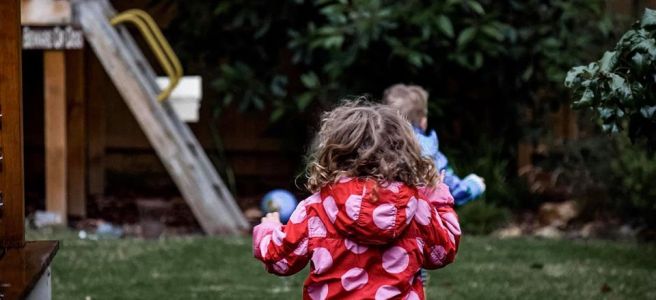
In this crazy and chaotic world, I want my children to be free. I want them to experience their childhood wholeheartedly and fully. I want them to run away from the bombardment of handheld screens and feel the grass under their toes and the sun on their face. In a world that is unpredictable and ever-changing, I want them to know that they are a part of a solid family unit and an eternal plan. I want them to learn how to safely navigate this new digital age without cyber threats and social media attacks and secrets and adult content and mainstream media. I want to treasure their innocence, rather than see it snatched away by today’s culture. I want them to love learning, to be curious and discover things, without being squashed by standardised testing. I want my children to run up the slide and climb trees without being told that it’s against the playground rules. I want them to connect with other humans. I want them go against every grain of this society that tells us how we should live our life. I want them to be free to be a child and to experience kindness, silliness, contentment, safety and joy.

Kingdom Work

I have a bachelor’s degree, and a postgraduate degree. I have had a successful career in a well-respected profession. I don’t think that because I spend most of my time with my children, that I am uneducated or living a menial existence. In fact, the greatest education of my life began when I became a mother. Since given the beautiful privilege of raising and educating my children, I have never been more busy, more creative. I have never been more well-read and I have never used my brain as much to think outside the box, solve problems and contemplate life’s big questions. I have never before been so connected with groups of intelligent women to share deep discussions with and to grapple with society’s most pressing issues.
⠀⠀⠀⠀⠀⠀⠀⠀⠀⠀⠀⠀
Sure, motherhood can be brainless and banal and monotonous if that’s all you take from it – just like anything in life. But if you grasp this precious role with both hands and truly use the gifts you’ve been given, you can transform, create, problem-solve, think, be busy, and be transformative. Motherhood is real work, and it is important work. It is the profession that creates all other professions. It is kingdom work.

The Vestibular System and Child Development

Did you know the vestibular system is our body’s first sensory system to develop in the womb? It is controlled by the inner ear, and it is incredibly important.
⠀⠀⠀⠀⠀⠀⠀⠀⠀
A well-developed vestibular system allows children to have the postural strength to sit at a desk, or to control their arm muscles when writing. Stimulating the vestibular system improves fine motor skills and hand-eye coordination. The vestibular system even helps to develop eye muscle movements that are required to track words when reading.
⠀⠀⠀⠀⠀⠀⠀⠀⠀
The thing is, in order to develop the vestibular system, children need to MOVE. Running, or playing a short physical game may stimulate the vestibular system to a small extent. But since this important sensory system is stimulated by fluid in the inner ear, what children really need to be doing is swinging, rolling, going upside down, tumbling, jumping from heights, falling, clambering and climbing. Unstructured, risky, physical play.
⠀⠀⠀⠀⠀⠀⠀⠀⠀
When we impose rules like ‘no running on the playground’ or ‘no going up the slide’ or ‘you cannot climb that’ we are hindering the development of this important system. It’s completely counter productive to tell children to stop moving and sit still – they will not develop the muscle and posture control they need to sit and work unless they spend their childhood MOVING!

“Sit still!”

My son loves cars, trucks and machines. He is constantly constructing and deconstructing. He doesn’t have a strong grasp of language yet but he uses his hands to build, carry and maneuver. He is strong, and thrives when he can move his body.

The other day whilst on a walk, we stopped to watch some building construction happening across the street. My son was enthralled with this scene. But observing these builders had me thinking. There are so many kids at school who can’t sit still, who don’t thrive with bookwork or sedentary tasks. They’re constantly told they need to sit still, write more, be neater and do things that aren’t consistent with their learning style. Sadly, the structure of school means that if these children do embrace their need to move and fiddle, they are disrupting others. There is literally no room to move. Yet I was watching these tradesmen across the road doing their job and making a living, and they were: moving their bodies, using their hands, calculating, designing, pushing, lifting. They were taking notes and calculating mathematical concepts on timber beams while climbing a ladder. They were not sitting still or staying at their desk. Just like mechanics and electricians and other trades people, chefs, hairstylists, firefighters, physical and occupational therapists, police officers, fitness trainers, paramedics, athletes, performers, farmers, and a plethora of other occupations that are valuable contributions to our society.

So why then, do we expect children to sit still, and to stop fiddling? To stop touching, to be quiet, to somehow thrive in an environment that consists of mostly deskwork? Why do we expect children to do things a certain way, when many of the jobs they might have in the future have nothing to do with any of those skills?

Let the children move their bodies. Let them touch things, fiddle, tinker and play.

Distance Learning in Isolation

I hope that parents who are caught up in the chaos of distance education right now understand that this is not a normal way to educate, and it’s not an ideal learning environment for children. It’s not homeschooling, it’s distance learning in isolation. Teachers are working hard to adapt to a stressfully impossible situation but they too know this is not how children learn.

I’ve heard that many schools are implementing full days of online learning every single day of the week, meaning that students have to sit, desk-bound, at their computers for the entire day with a few breaks. It is not normal, nor is it healthy, for children have such a sedentary lifestyle. We know that screentime has an effect on children and teenager’s brains, and we know that sitting at a computer for an entire ‘school day’ at home is not going to be doing their bodies or minds any favours. Children need to move, chat, solve a problem by holding and touching it, build things with their hands, be in nature, have people to bounce ideas off, use concrete materials, exercise visual and spatial skills, and did I mention they need to MOVE?

It’s no wonder parents are finding this tedious and stressful, and that their children are unsettled or unstimulated. So if you’re a parent currently in the throes of this, be gentle with yourself and with your children (and the teachers), and remind yourself that is is not, ideally, how children learn. Take a deep breath, turn off the computer, go outside or just snuggle up and read with them. You are teaching them how to live amid a worldwide crisis. And most importantly, you are teaching them that they are loved and safe no matter what the situation or where they are.

A Poem for a Pandemic

We can send our children to childcare,
but at schools we can’t teach.
We can visit the bottle shop,
but can’t walk on the beach.
Women are birthing
alone
by themselves,
while qualified graduates are looking for jobs
packing shelves.
While we’re all distracted
with what’s on the news and TV,
governments are changing policies
in places we can’t see.
We’re all virtue signalling
#stayhome! Save lives!
and mental health problems,
we’re already counting by fives.
We are doing this all for
health and wellbeing,
but now all these
unhealthy
unsolvable
world problems we’re seeing.
Unemployment, domestic violence –
they’re all on the rise,
and we celebrate that cities
finally have blue skies.
Such strange times we are living,
this waiting game.
It’s clear that the world
will never be the same.
From their comfortable mansions
celebrities post videos,
“We’re all in this together!”
…but people are feeling
more
isolated
than
ever.
It’s hard to live
when your freedom has been taken,
when your world has been shaken,
and full of misinformation.
Is there something behind this?
What is the reason?
The solution? The impact?
Will we recover from this season?
I’m afraid I don’t know,
nor do you.
But I know I am loved
and I know you are, too.
Don’t believe all you hear,
step in other people shoes,
and maybe for a minute just
take your eyes off the news.
In these challenging times
let’s embrace what is true.
Let’s love
give
pray
trust
discern
help
and pull through.

Parenting in a Pandemic

Tonight I had to comfort this teary little one at bedtime, but for reasons that we’ve never before had to comprehend. “Mama, I can’t sleep because I’m sad. I miss my friends and my favourite families and sleepovers, and that’s why we always have to video chat people and put teddies in the window and it’s not fair.” Let’s remember that this unprecedented event is like no other any of us had to experience in our childhood. They see, hear and process everything that is going on around them. Let’s be gentle with them, let’s show patience and understanding. Let them be loud and silly and clumsy inside, when the only reason they can currently leave their house is to go for a walk. Let them not participate in phone calls or video chats if they’re feeling overwhelmed. Let’s listen to their complaints and troubles. Most importantly, let’s be the arrow that points them to the solid rock and greatest hope in these times of trouble.

The Rise of ‘Homeschooling’ amid COVID-19…

Isn’t it funny and amazing how the word ‘homeschooling’ has suddenly become a part of our everyday vocabulary? With the COVID-19 crisis, many schools are closed or parents are choosing to keep their children home. Almost overnight, people are no longer looking at others in shock when they reveal that they are homeschooling!

Let’s not forget though, that the version of ‘homeschooling’ currently happening is not typical. Home educated children, who are normally out engaging with their community, are confined by the walls of their home. We’re isolated, lacking social interaction, missing family and friends. Parents are stressed because they’re trying to work from home with little ones about, or they have lost their jobs completely. We’re living amid a worldwide pandemic. Homeschooling is not normally like this.

However, despite this, I am also seeing so much positivity surrounding homeschooling emerge during this time which makes my heart happy. Parents are realising that their children are still learning. It looks different, sure. But they are capable of learning away from school!

At the moment, social media is littered with happy photos posted by parents navigating this whole new home education thing. Sharing their little homeschool space they have set up, marvelling at how peacefully their children are working – or how chaotically joyful it is to have them around. Parents are posting pictures and videos of various educational activities they have been doing with their children. Many parents are even talking about how they’re not following a school routine, but have instead realised how valuable activities like gardening, sewing, cooking, playing and just talking and reading with their kids are. When I look at all of these families sharing their newfound homeschooling journey, I can’t help but notice a hint of pride in their posts – they’re proud of the fact that they have realised they can actually provide their children with meaningful, educational experiences.

Many people are also realising that in this current age, educational opportunities can be provided for digitally. You do not have to attend a brick-and-mortar school to participate in a class. Children are taking classes online, having video chats with teachers and other field experts, and participating in all sorts of online classrooms and conversations. What a blessing technology is! Obviously, it is not ideal to spend our entire educational lives immersed in a digital world. But, homeschooled children usually participate in a balance of real-life social interactions and online learning opportunities. This crisis has prompted many parents (and teachers) to realise that, thanks to technology, children can participate in educational experiences remotely.

When this is all over, and children go back to school as their parents head back into the workforce, my hopes are that many families might continue to homeschool after seeing such rich benefits (Side note: You don’t have to be a stay-at-home parent to homeschool. My husband and I both work outside the home!). I know that every family is completely different and that homeschooling may not fit with everyone or be everyone’s choice – and that’s okay! But I also hope that perhaps after this, homeschooling will no longer be seen as so unusual, radical or unacceptable. That society will have a new appreciation for home education and that we may better understand why an increasing number of families are choosing to homeschool their children. Because all of those wonderful things you’re posting about – the unrushed mornings, spending more time as a family, learning through real life – us homeschoolers get to experience those joys permanently.