It occurred to me today that we’re living in a world that is nothing like the one I knew as a child. Obviously this pandemic has drastically changed society, but even aside from that, our world has changed. Technology is abundant, but so are dangers and deception. Smartphones and tablets and screens are an extension of our body. Worrying statistics show us that childhood anxiety is on the rise. Families are being told that they function best when separated and are encouraged to enter their children into ‘the system’ earlier and earlier. A system where children have become victims to wicked and worrying agendas that are infiltrating our schools, our televisions, our lives, their childhood. We live in the age of social distancing, in a society where we are pitted against one another, where human connection is lost and undervalued. Education has become less about children, and more about adults.
⠀⠀⠀⠀⠀⠀⠀⠀⠀⠀⠀⠀
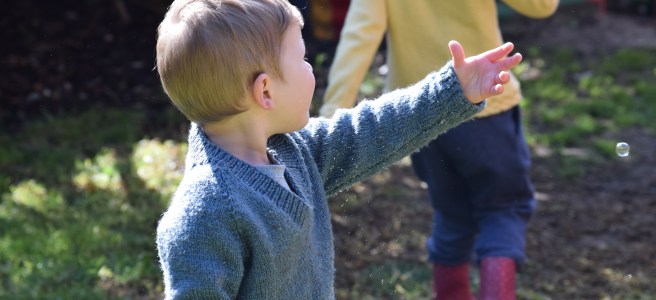
In this crazy and chaotic world, I want my children to be free. I want them to experience their childhood wholeheartedly and fully. I want them to run away from the bombardment of handheld screens and feel the grass under their toes and the sun on their face. In a world that is unpredictable and ever-changing, I want them to know that they are a part of a solid family unit and an eternal plan. I want them to learn how to safely navigate this new digital age without cyber threats and social media attacks and secrets and adult content and mainstream media. I want to treasure their innocence, rather than see it snatched away by today’s culture. I want them to love learning, to be curious and discover things, without being squashed by standardised testing. I want my children to run up the slide and climb trees without being told that it’s against the playground rules. I want them to connect with other humans. I want them go against every grain of this society that tells us how we should live our life. I want them to be free to be a child and to experience kindness, silliness, contentment, safety and joy.
Category: Family Life
Parenting in a Pandemic
Tonight I had to comfort this teary little one at bedtime, but for reasons that we’ve never before had to comprehend. “Mama, I can’t sleep because I’m sad. I miss my friends and my favourite families and sleepovers, and that’s why we always have to video chat people and put teddies in the window and it’s not fair.” Let’s remember that this unprecedented event is like no other any of us had to experience in our childhood. They see, hear and process everything that is going on around them. Let’s be gentle with them, let’s show patience and understanding. Let them be loud and silly and clumsy inside, when the only reason they can currently leave their house is to go for a walk. Let them not participate in phone calls or video chats if they’re feeling overwhelmed. Let’s listen to their complaints and troubles. Most importantly, let’s be the arrow that points them to the solid rock and greatest hope in these times of trouble.
The Rise of ‘Homeschooling’ amid COVID-19…
Isn’t it funny and amazing how the word ‘homeschooling’ has suddenly become a part of our everyday vocabulary? With the COVID-19 crisis, many schools are closed or parents are choosing to keep their children home. Almost overnight, people are no longer looking at others in shock when they reveal that they are homeschooling!
Let’s not forget though, that the version of ‘homeschooling’ currently happening is not typical. Home educated children, who are normally out engaging with their community, are confined by the walls of their home. We’re isolated, lacking social interaction, missing family and friends. Parents are stressed because they’re trying to work from home with little ones about, or they have lost their jobs completely. We’re living amid a worldwide pandemic. Homeschooling is not normally like this.
However, despite this, I am also seeing so much positivity surrounding homeschooling emerge during this time which makes my heart happy. Parents are realising that their children are still learning. It looks different, sure. But they are capable of learning away from school!
At the moment, social media is littered with happy photos posted by parents navigating this whole new home education thing. Sharing their little homeschool space they have set up, marvelling at how peacefully their children are working – or how chaotically joyful it is to have them around. Parents are posting pictures and videos of various educational activities they have been doing with their children. Many parents are even talking about how they’re not following a school routine, but have instead realised how valuable activities like gardening, sewing, cooking, playing and just talking and reading with their kids are. When I look at all of these families sharing their newfound homeschooling journey, I can’t help but notice a hint of pride in their posts – they’re proud of the fact that they have realised they can actually provide their children with meaningful, educational experiences.
Many people are also realising that in this current age, educational opportunities can be provided for digitally. You do not have to attend a brick-and-mortar school to participate in a class. Children are taking classes online, having video chats with teachers and other field experts, and participating in all sorts of online classrooms and conversations. What a blessing technology is! Obviously, it is not ideal to spend our entire educational lives immersed in a digital world. But, homeschooled children usually participate in a balance of real-life social interactions and online learning opportunities. This crisis has prompted many parents (and teachers) to realise that, thanks to technology, children can participate in educational experiences remotely.
When this is all over, and children go back to school as their parents head back into the workforce, my hopes are that many families might continue to homeschool after seeing such rich benefits (Side note: You don’t have to be a stay-at-home parent to homeschool. My husband and I both work outside the home!). I know that every family is completely different and that homeschooling may not fit with everyone or be everyone’s choice – and that’s okay! But I also hope that perhaps after this, homeschooling will no longer be seen as so unusual, radical or unacceptable. That society will have a new appreciation for home education and that we may better understand why an increasing number of families are choosing to homeschool their children. Because all of those wonderful things you’re posting about – the unrushed mornings, spending more time as a family, learning through real life – us homeschoolers get to experience those joys permanently.
Rediscovering the Importance of Family Life
Before the industrial revolution, family time was incredibly important. Families worked together, as a unit, to produce goods. As families were working together on the land, children were able to play, learn from, and spend plenty of time with their parents and siblings. Children learnt practical skills like how to cook, garden, sew, and build. Following this era, family members’ lives became separate. Women’s roles in the economy took a major hit, as they began to take on more of a “housewife” role while men had to work long hours to provide for their family. Before the industrial revolution, families would work at their own pace from home, living a comfortable and content lifestyle and choosing their own work hours and days.
Schools as we know them today – compulsory, standardised, mostly state controlled, and mass-educating – were established in around 1870, following the industrial revolution. It makes sense that the 9-to-3 school day loosely models itself upon the 9-to-5 work day that emerged around this time. The problem is that these workplace guidelines were put in place to cater for the needs of manufacturing and factory workers. While manufacturing and factory work still exists, today’s modern society has produced thousands of other industries and workplace domains that are not confined by the hours of 9-to-5. Technology has made it easier to do work anywhere and at any time, employers offer far more flexibility, people are travelling more. A factory model for workplaces and schools no longer works for many families.
My better half, my wonderful husband and involved father, does not work 9-to-5. Sometimes he is home during the day, and goes to work at night. Sometimes he works day shifts, or split-shifts. He almost always works on the weekend. This has been a significant factor in our decision to explore the idea of homeschooling. In the post-industrialisation ‘standard’ work/home model, a parent may work from Monday to Friday during the day while their children are at school. They will then come home and eat dinner together as a family, or spend some special time together, such as putting their children to bed. In addition to this, they have two whole days on the weekend together to spend as a family. On the other hand, in families where work hours do not follow this pattern, time together is sparse. A parent may work evenings or nights, missing out on their children when they come home from school, or they may work every weekend – the only two days the children are home. I know several shift working families where the children can go weeks without seeing their mother or father due to the fact that their parent is working evenings, nights or weekends and the children are at school during the only time that the parent is off work. Moving away from the 9-to-3 school day, and instead choosing to home educate, would be a wonderful option for families where work hours do not follow the traditional Monday to Friday, 9-to-5 model.
The beauty of homeschooling is that, as a family, you can dictate your own hours. Thanks to a magnificently low student-to-teacher ratio, many homeschooling families are able to get as much school work done in a couple of hours that would take a full six hour day to achieve at school. Families with parents who work on weekends could utilise days during the week to spend together, and dedicate weekend days to schooling. Holidays together don’t have to occur in the school holidays and the opportunity to travel or move without restriction becomes possible. In such a flexible, ever-changing and dynamic modern society, it seems to make sense to re-evaluate the rigid hours set by schools that were created to conform to the factory-like culture of the manufacturing and industrial age.
Obviously, the idyllic picture I painted at the beginning of the pre-industrialisation family is long gone. But we have also well and truly moved on from the industrial era – so why are we still structuring our homes, workplaces and schools like this? As society moves on faster still, leaving the information age behind and transitioning into a time where creativity is the new capital, let’s be creative with how we view our work and home lives. Let’s rediscover some of the benefits of family life that flourished prior to the industrial revolution, rethink how we educate our children (not to be mass-produced factory workers), and recognise that not all families are living in a 9-to-5 world.